
A single well-written page doesn’t rank for one keyword. It ranks for hundreds, sometimes thousands. Ahrefs’ study of 3 million search queries found that the average #1 ranking page also ranks in the top 10 for nearly 1,000 other keywords.
That’s not a fluke. That’s semantic SEO working exactly as intended.
The old model of mapping one keyword to one page is functionally dead. Semantic SEO exists because Google’s algorithm, since Hummingbird (2013) and later BERT (2019), processes search queries by meaning, not by matching exact words. Searchmetrics data showed that after Hummingbird, search result overlap for semantically similar keyword pairs increased by nearly 20%.
The question is no longer “how many keywords should I target?” It’s “how deeply can I cover the topic so that one page answers dozens of related queries?”
This guide will break down the research behind semantic SEO, show you how keyword clustering works in practice, and explain how to structure a single page to capture traffic across multiple queries.
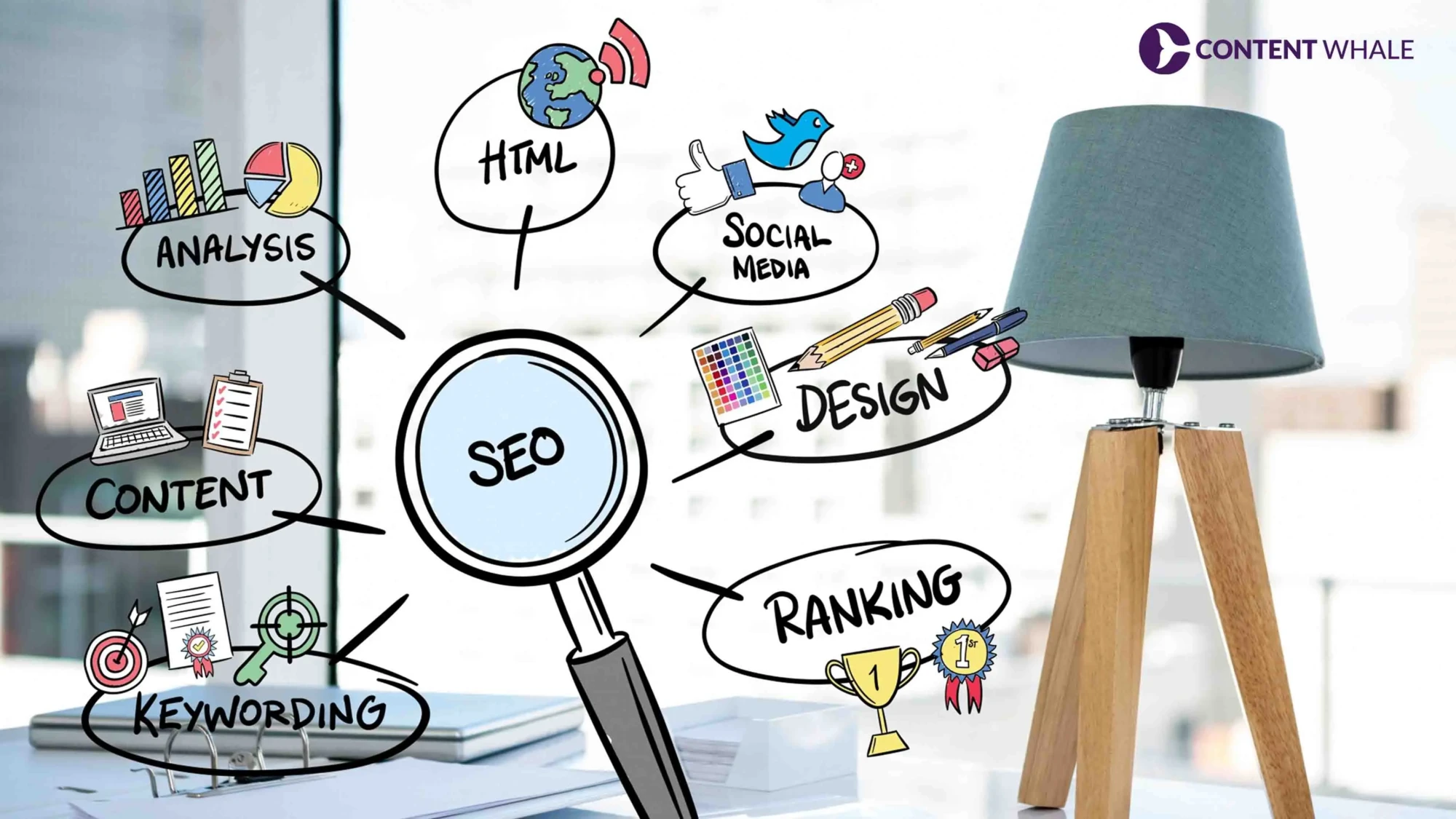
What Is Semantic SEO and Why Does It Replace Keyword-First Thinking?
Semantic SEO is the practice of writing content around topics and meaning instead of isolated keywords.
Before 2013, Google matched words in queries to words on pages. After the Hummingbird algorithm rewrite, Google began interpreting the full context and intent of a query.
A study published in SAGE Journals confirmed that semantic SEO requires content creators to account for entity relationships and contextual signals to improve discoverability in modern search (Source).
Practically, this means:
- Google groups semantically similar queries and serves overlapping results
- A page about “link building tips” and “link building techniques” will share 90%+ of the same SERP results
- Content that covers a topic in full can rank for long-tail variations without explicitly targeting them
A ResearchGate paper on keyword extraction noted that using latent semantic analysis (LSA) for SEO helps model the relationship between documents and terms, producing more effective targeting at lower cost (Source).
LSA-based approaches align directly with how semantic SEO treats content as interconnected meaning rather than isolated phrases.
Can One Page Really Rank for Multiple Keywords?
Yes. And the data is clear. Here’s a quick comparison:
| Metric | Finding | Source |
| Avg. keywords a #1 page ranks for (top 10) | ~1,000 | Ahrefs, 3M query study |
| SERP overlap increase post-Hummingbird for similar queries | ~20% | Searchmetrics |
| Pages getting zero traffic from Google | 96.55% | Ahrefs |
| Pages ranking in top 10 within a year of publishing | 5.7% | Ahrefs |
| Clicks going to top 3 organic results | 75.1% | Ahrefs |
The takeaway: most pages fail because they target thin keywords without topic depth. Semantic SEO flips this.
Pages that succeed cover the subject comprehensively and rank for multiple keywords as a byproduct.
Andy Crestodina of Orbit Media documented a case where a page targeting a keyword with just 5–10 monthly searches attracted 200+ monthly visitors.
The reason? Google Search Console showed the page ranking for 573 different phrases (Source). This is semantic SEO in action: one page, one primary keyword, hundreds of rankings.

How Does Keyword Clustering Support Semantic SEO?
Keyword clustering is the process of grouping semantically related keywords that share the same search intent. Instead of creating a separate page for every keyword variation, you assign one cluster of related queries to one page.
Here’s how it works:
- Step 1: Collect all keyword variations for a topic (seed + long-tail + question-based)
- Step 2: Analyze SERP overlap. If two keywords return 60%+ of the same URLs in the top 10, they belong in the same cluster
- Step 3: Map each cluster to one page. Write content that answers all queries in that cluster
- Step 4: Use internal linking to connect related clusters and build topical authority
Keyword Insights tested 13 keyword clustering tools and found that SERP-based clustering (analyzing actual Google results for overlap) outperformed simple NLP-based grouping in accuracy (Source).
Without keyword clustering, you risk keyword cannibalization, where two of your own pages compete for the same query.
Semrush’s Position Tracking tool tracks this specifically, measuring what percentage of your keywords have multiple competing pages in the top 100 (Source).
Proper keyword clustering is how semantic SEO scales across an entire site without internal competition.
What Does Content Structure Look Like for Semantic SEO?
Ranking for multiple keywords through semantic SEO requires more than stuffing synonyms. The content itself needs structural depth. Here’s a framework:
Title tag and H1: Include primary keyword. Keep it specific.
H2s and H3s: Use actual queries your audience asks. Think of each H2 as a separate search query you’re answering.
Body content: Cover subtopics, related entities, and synonyms naturally. Longer content correlates with ranking for more keywords. Ahrefs’ data showed pages with higher word counts consistently appeared in more keyword rankings across their 3M query dataset (Source).
Internal links: Connect related pages to build topic clusters. Zyppy’s research found that URLs with more anchor text variations from internal links had a strong positive correlation with Google search traffic (Source).
Structured data: Schema markup helps Google interpret entities and relationships on the page, reinforcing your semantic SEO signals. A ResearchGate study on sustainability SEO showed that semantic algorithms detecting thematic clarity in content led to better search engine indexing and clustering of results (Source).

How Do You Pick the Right Primary Keyword for a Cluster?
Not all keywords in a cluster should be the title. Your primary keyword should meet three criteria:
- Highest search volume within the cluster (relative, not absolute)
- Clearest intent match for the content format you’re creating
- Winnable difficulty based on your site’s authority score
Search volume alone is misleading. Ahrefs introduced “Traffic Potential” as a metric specifically because single-keyword volume underestimates the total traffic a page can earn from all keyword variants it ranks for (Source).
Orbit Media’s approach recommends starting with audience-first writing, not keyword-first outlines. Write the most complete answer to the topic, then reverse-engineer keyword placement after the draft is done (Source).
This audience-first method is what separates semantic SEO from traditional keyword optimization.
What Role Does Search Intent Play?
Search intent is the reason behind a query. Google’s algorithms evaluate whether your page matches the intent type:
| Intent Type | Example Query | Content Format |
| Informational | “what is semantic SEO” | Blog post, guide |
| Commercial | “best keyword clustering tools” | Comparison, review |
| Transactional | “buy Ahrefs subscription” | Product/pricing page |
| Navigational | “Semrush login” | Brand page |
Mismatched intent kills rankings. A Semrush study of 16,298 keywords and 300,000 SERP positions found that content relevance to the query (measured via word embeddings) was among the strongest ranking correlations (Source).
For semantic SEO, this means: if every top-10 result for your primary keyword is a how-to guide, don’t publish a product page. Match format, match depth, match intent.
Conclusion
Semantic SEO shifts the unit of optimization from a single keyword to a complete topic. The research is consistent: pages that cover subjects with depth, match search intent accurately, and use keyword clustering to avoid cannibalization capture far more organic traffic than pages built around one isolated phrase.
The tools and data exist. What’s left is execution.
If you’re looking to implement semantic SEO and keyword clustering into your content strategy, contact Content Whale to build a topic-first content plan that ranks across hundreds of queries.
FAQs
How many keywords should I target per page?
One primary keyword and 2–4 secondary keywords per page is standard. But with semantic SEO and keyword clustering, a single page can rank for hundreds of related queries if the content covers the topic fully.
Is keyword density still relevant for semantic SEO?
Keyword density matters less than topical coverage. Google evaluates meaning, entity relationships, and content depth. A 1–2% density for your primary keyword is reasonable, but forced repetition hurts readability and rankings.
What is the difference between keyword clustering and topic clusters?
Keyword clustering groups keywords by SERP overlap into single-page targets. Topic clusters are a site architecture strategy linking multiple pages (cluster pages) to a central pillar page. Both support semantic SEO but operate at different levels.
Does longer content always rank for more keywords?
Ahrefs’ data shows a positive correlation between content length and the number of keywords a page ranks for. But length alone isn’t the factor. Semantic SEO works because the content covers more subtopics and answers more queries, not because the word count is higher.