
SEO transforms PR from momentary attention into long-term brand equity. While traditional public relations creates visibility spikes, search optimization preserves that attention and multiplies reach for months or years after coverage appears. 78% of journalists say PR pitches miss the mark because they focus on announcements instead of stories people search for.
This guide will explore tactical frameworks for keyword-driven PR ideation, digital asset creation that earns links, and measurement models that prove impact.
Why PR Without SEO Leaves Value on the Table

The Short Shelf Life of Traditional PR
Press releases live an average of 24-72 hours in active circulation before algorithmic feeds bury them. Third-party coverage sits on domains you do not control. When the news cycle moves, so does attention.
What gets lost:
- Context around your announcement
- Control over how your brand is positioned
- Ability to extend reach beyond the journalist’s audience
The Discoverability Gap
According to Google Search data, 71% of users conduct research after initial brand exposure through any channel Source). If your owned content is not ranking:
- Third-party narratives dominate search results
- Competitors targeting the same keywords capture demand
- You pay for attention twice—once through PR, again through ads
SEO as the Distribution Layer for PR
Search engines process 8.5 billion queries daily (Source). SEO lets public relations content intercept these queries long after publication. It turns momentary attention into:
- Ongoing brand visibility
- Searchable authority signals
- Demand generation that does not expire
How SEO and PR Actually Complement Each Other?
PR Builds Authority, SEO Signals It
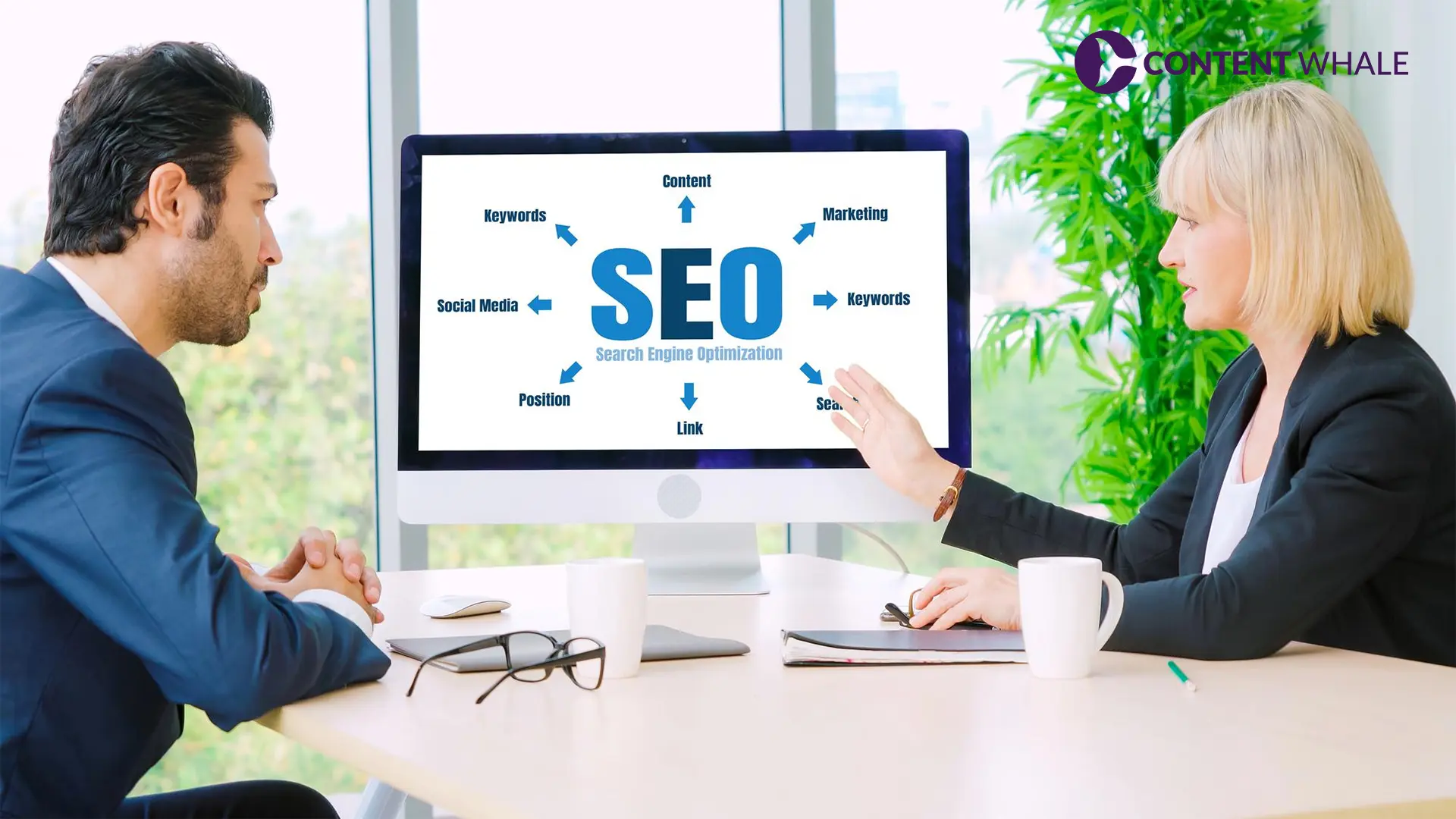
Public relations earns trust from humans through credibility markers: media logos, expert quotes, third-party validation. SEO translates those signals into language search algorithms to understand: backlinks, domain authority, content relevance.
The handoff:
- Journalist mentions your data → backlink equity flows to your site
- Media quote your founder → structured authorship markup strengthens E-E-A-T
- Coverage includes your brand → branded search volume increases
Shared Goals Between PR and SEO
Both disciplines aim for:
- Brand visibility: PR through editorial placement, SEO through rankings
- Authority and credibility: Public relations via media validation, SEO through topical depth
- Demand generation: PR creates awareness spikes, SEO sustains discovery
- Reputation management: Best PR shapes narrative, SEO controls what ranks
Where Teams Typically Disconnect
Best PR teams focus on storytelling and relationship-building. SEO teams optimize for search intent and technical performance. The gap appears when:
- Press releases are not written for search
- Earned media is not republished on owned properties
- Brand assets lack keyword optimization
- No shared KPIs exist between teams
According to a survey by Fractl, only 38% of public relations professionals regularly coordinate with SEO teams, despite 82% acknowledging overlap in goals.
Keyword-Driven PR Ideation (The Foundation)
Moving Beyond Announcement-Based PR
“Company X launches product Y” pitches underperform because:
- They lack search demand
- Journalists receive 50-200 similar pitches daily
- Search engines reward problem-solution framing over announcements
How to Find PR Angles People Search For
Start with search data:
- Brand + industry terms (e.g., “best PR tools for SaaS”)
- Question-based queries (“how does public relations affect SEO”)
- Trend keywords (Google Trends rising topics)
- Competitor content gaps (Ahrefs Content Gap analysis)
Map queries to storylines:
- “How to improve brand visibility” → PR case study on visibility metrics
- “What is digital PR” → Expert commentary on industry evolution
- “Best PR vs advertising effectiveness” → Original research with data
Mapping Keywords to PR Storylines
Transform announcements into search-friendly narratives:
| Traditional Pitch | SEO-Optimized Angle |
|---|---|
| “We raised $10M” | “Why investors are betting on [market category]” |
| “New partnership announced” | “How [trend] is reshaping [industry]” |
| “Product update released” | “5 ways to solve [customer pain point]” |
Outcome: Journalists get better stories. Search engines get relevant content. Brands own discovery moments.
Digital PR Assets That Earn Links and Rankings

Why Mentions Are Not Enough
Only 42% of media mentions include backlinks. Without links, coverage delivers awareness but not authority. Contextual backlinks from high-domain-rating publications improve:
- Page authority for target content
- Overall site trustworthiness
- Keyword rankings through topical relevance
High-Authority PR Asset Types
Original data studies: Create proprietary research journalists cite repeatedly. Example: “State of [Industry] Report 2024”
Industry benchmarks: Quantify performance standards others reference.
Expert commentary on breaking trends: Position spokespeople as go-to sources.
Interactive tools and calculators: Build embeddable resources media outlets link to.
Whitepapers with quotable insights: Provide depth for long-form editorial pieces.
Structuring Assets for SEO
Make best PR content indexable and rankable:
- Clear H1 and descriptive subheadings
- Dedicated landing pages (not PDFs)
- Embed-ready charts and graphics
- Journalist-friendly one-page summaries
- Schema markup for datasets
Outreach With SEO Intent
Target publications based on:
- Domain authority above 50 (Moz metric)
- Topical relevance to your niche
- Historical performance (do their articles rank?)
- Link attributes (dofollow vs nofollow)
Quality over volume: 10 links from industry-specific publications outperform 100 from generic directories.
Brand SERP Optimization Through PR
What Happens After PR Coverage
Branded search volume spikes 34% on average within 7 days of major media coverage (Moz Brand Search Study, 2023: https://moz.com/blog/guide-to-branded-search). During this window:
- Users scrutinize your brand
- Comparison behavior intensifies
- Negative or irrelevant results get more visibility
Controlling the Brand Narrative in Search
Optimize owned assets to dominate page one:
- About page: Clear value proposition, optimized meta data
- Press and media hub: Centralized coverage archive
- Executive profiles: LinkedIn, company bio pages
- FAQ content: Address common objections
Internal linking strategy: Link from high-authority public relations mentions back to product/service pages to pass equity.
Defensive SEO for Reputation
Prevent unwanted content from ranking:
- Build topical authority around brand terms
- Create content clusters addressing potential concerns
- Monitor SERP changes weekly during campaigns
- Use schema markup to claim knowledge panel data
Thought Leadership as an SEO-Powered PR Engine

Why Opinion Content Attracts Both Links and Coverage
Strong perspectives generate discussion. Contrarian takes earn citations. According to Semrush’s content study, opinion-driven articles receive 2.3x more backlinks than purely informational content (Source).
Structuring Thought Leadership for Search
Evergreen themes that rank:
- Industry futures and predictions
- Common misconceptions debunked
- Original frameworks and methodologies
Technical requirements:
- Clear authorship with author schema
- Canonical ownership on your domain
- Supporting data and citations
- Keyword optimization without sacrificing voice
Distribution Strategy
Step 1: Publish on owned media first
Step 2: Repurpose excerpts for best PR pitching
Step 3: Use earned mentions to reinforce authority through internal linking
This creates a self-reinforcing cycle: thought leadership → media coverage → backlinks → higher rankings → more discovery.
Turning PR Wins Into Evergreen SEO Assets
The One-to-Many Content Model
One public relations hit should generate multiple SEO assets:
- Interview → Long-form blog post
- Media quote → FAQ section
- Data mention → Visual explainer infographic
- Coverage roundup → Authority hub page
Repurposing Examples
Scenario: Your CEO is quoted in Forbes about industry trends.
Leverage:
- Create a detailed blog expanding on the quote
- Build an FAQ addressing related questions
- Design a shareable infographic with the data
- Add the Forbes logo to your press page with internal link
Why This Compounds Results
- PR fuels initial backlink acquisition
- SEO sustains traffic long after publication
- Content lifespan extends from days to years
- Each asset reinforces topical authority
Optimizing PR Content for AI and Zero-Click Search

The Rise of AI-Mediated Discovery
Google’s AI Overviews appear in 15% of all searches and growing (Source). These summaries cite sources without requiring clicks.
How PR Content Gets Chosen by AI
AI algorithms prioritize:
- Clear, fact-based explanations
- Structured formatting (lists, tables)
- Expert attribution and credentials
- Recent publication dates
- Strong topical authority
Visibility Without Clicks Still Builds Brand Equity
Zero-click results deliver:
- Brand impressions at scale
- Authority signals through citations
- Increased brand recall in future purchase decisions
Measuring PR Success With SEO Metrics
Why Vanity PR Metrics Fall Short?
Circulation numbers and impressions do not indicate:
- Whether coverage drove demand
- If brand perception improved
- How attention converted to action
SEO-Aligned PR KPIs
Track these metrics:
- Branded search volume growth (Google Trends, Search Console)
- Organic impressions for target keywords
- Backlink acquisition from coverage (Ahrefs, Moz)
- Referral traffic quality (engagement rate, conversion)
- Keyword ranking improvements post-campaign
Reporting That Aligns PR and SEO Teams
Build shared dashboards showing:
- Coverage → traffic → conversion paths
- Long-term keyword position changes
- Backlink equity accumulated over time
- Attribution models connecting public relations to pipeline
Common Mistakes When Combining PR and SEO
Treating press releases as ranking pages: They rarely compete in competitive search landscapes.
Ignoring on-site optimization: If your website is not technically sound, PR-driven traffic will not convert.
Chasing low-authority publications: 100 mentions from weak domains contribute less than 5 from strong ones.
Not republishing earned media correctly: Always create owned versions of content to capture long-tail search.
Failing to measure post-PR search behavior: Track how coverage affects brand queries and category terms.
Conclusion
Public relations sparks attention. SEO preserves and multiplies it. Media coverage builds trust that search engines recognize, keeping brand narrative visible beyond the 72-hour news cycle while connecting earned media to measurable business outcomes. Brands that coordinate strategy, share KPIs, and optimize for both human journalists and search algorithms win long after the headlines fade.
Ready to integrate best PR practices and SEO in your strategy? Contact Content Whale to audit your media mentions and build strategy that converts.
FAQs
How does SEO improve public relations outcomes?
SEO extends the lifespan and reach of PR content by making it discoverable through search engines. Traditional public relations generates attention during a news cycle, but SEO ensures earned media and thought leadership continue driving traffic months later.
What is the best way to measure PR and SEO integration success?
Track branded search volume increases, backlink acquisition from media coverage, organic impressions for target keywords, and referral traffic quality. Attribution modeling that connects public relations touchpoints to conversions provides the clearest ROI picture.
Can public relations help with SEO rankings?
Yes. High-quality media coverage generates backlinks from authoritative domains, which remain one of Google’s strongest ranking signals. Best PR increases branded search volume and creates opportunities for content syndication that reinforces topical authority.