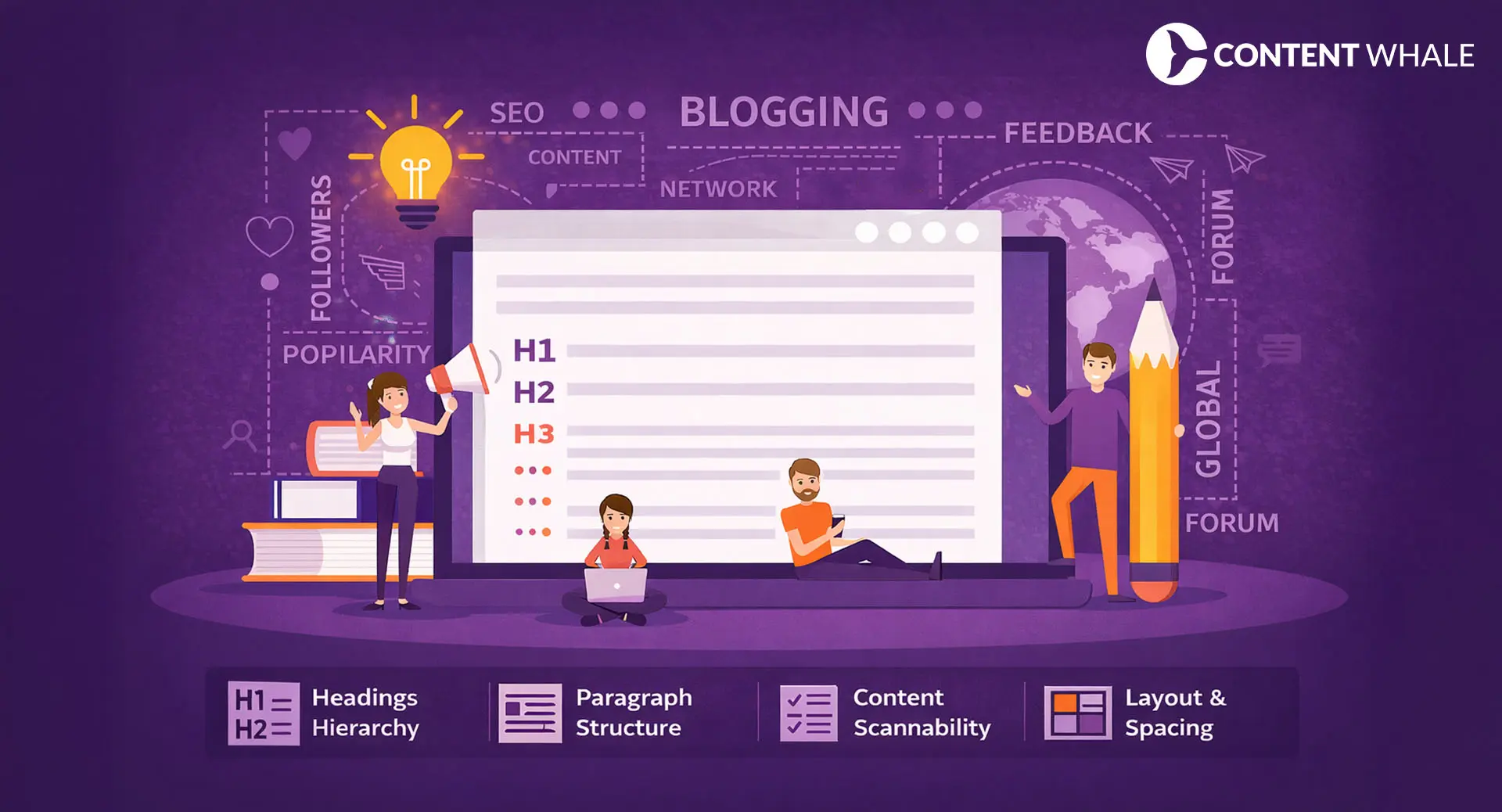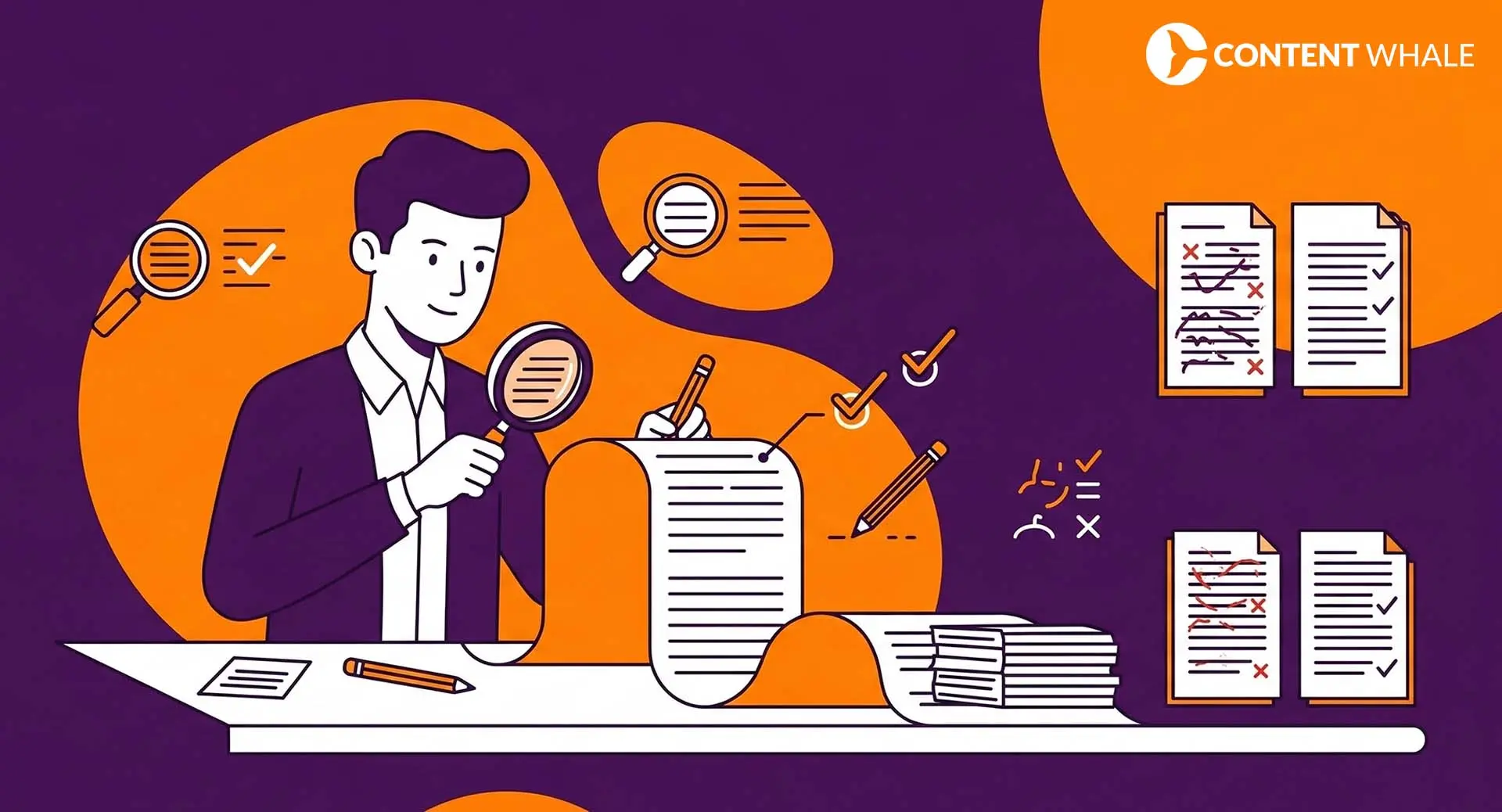
Around 6 to 7.5 million blog posts go live every day. With that volume, grammar errors and formatting issues quickly erode credibility. Proofreading is the final quality control step before publication. Businesses rely on professional proofreading services to keep content accurate, consistent, and brand-aligned. Editing and proofreading together turn drafts into publish-ready assets.
This guide covers how proofreading works, what providers offer, and how to pick the right one.

Editing vs Proofreading: Understanding the Difference
A common mistake is treating editing and proofreading as the same task. They serve different purposes at different stages of content production.
What Editing Involves?
Editing addresses the bigger picture of a written piece. It covers:
- Content structure and logical flow
- Sentence clarity and readability
- Tone consistency across sections
- Argument strength and information gaps
- Paragraph transitions and pacing
The process itself breaks down into several types. Developmental editing focuses on overall structure and content direction. Line editing refines sentence-level clarity. Copyediting handles grammar accuracy, punctuation, and style guide compliance. Each type targets a specific layer of the content, and larger editorial projects often require all three in sequence before the final review stage begins.
What Proofreading Focuses On?
This stage is the final technical review applied after all editing rounds are complete. A proofreader checks for:
- Grammar corrections (subject-verb agreement, verb tense errors)
- Punctuation fixes (commas, semicolons, apostrophes)
- Spelling errors and typos
- Formatting inconsistencies (headings, spacing, alignment)
- Typographical mistakes (double spaces, missing periods)
Research from Boland and Queen (2016), published in Business and Professional Communication Quarterly, found that readers judged writers with grammatical errors as less competent and less trustworthy compared to those with error-free writing. That finding alone shows why this final review step matters.
Why Editing and Proofreading Work Together?
Editing improves what the content says. The final review ensures how it looks and reads on a technical level. Skipping either step introduces risk. A well-edited article with typos still damages credibility.
A perfectly spelled article with poor structure still fails to hold attention. Editing and proofreading function as two distinct but connected stages in any professional editorial process, and both are necessary for content that performs.
Where Proofreading Fits in the Editorial Process?
Professional publishing and content marketing teams follow a structured editorial workflow. The final review always comes last.
Step 1: Draft Creation
Writers focus on getting ideas down, building arguments, and covering the topic fully. Grammar and polish are secondary at this stage. The goal here is completeness, not perfection.
Step 2: Structural Editing
Editors reorganize sections, remove redundancies, and strengthen the logical flow of the piece. This is the most intensive revision stage and often requires significant rewriting.
Step 3: Line Editing
Each sentence is reviewed for clarity, conciseness, and readability. Awkward phrasing and weak transitions get fixed here. The tone is also refined to match the target audience.
Step 4: Copyediting
Grammar accuracy, punctuation, and adherence to the brand’s style guide are checked. Copyediting is detail-oriented but still falls before the final review.
Step 5: Final Review (Proofreading)
The last safeguard before publishing. This step catches surface-level errors that survived earlier editing rounds. No content changes happen here. The focus is strictly on accuracy and formatting.
Research on familiarity bias in writing shows that authors often miss a significant portion of errors in their own drafts because they read what they intended to write rather than what is actually on the page. That gap is exactly what a dedicated final review step fills.

What Professional Proofreading Services Include?
When you hire a service provider for this stage, the scope typically covers four core areas.
Grammar and Language Accuracy
The review catches verb tense shifts, subject-verb disagreements, incorrect article usage, and syntax issues that automated tools frequently miss. These are errors that weaken readability even when the content itself is strong.
Punctuation and Spelling Checks
This includes comma placement, quotation marks, apostrophe usage, semicolon accuracy, and identifying misspelled or misused words (e.g., “their” vs. “there”).
Formatting Consistency
Service providers verify:
- Heading hierarchy follows a uniform structure
- Bullet points use consistent punctuation
- Spacing and alignment match across sections
- Font sizes and styles remain uniform
Style Guide Compliance
Many businesses maintain brand style guides or follow editorial standards like AP Style or Chicago Manual of Style. A professional review ensures every piece aligns with the specified guidelines, from capitalization rules to number formatting.
The Professional Proofreading Checklist
A structured checklist keeps the review process consistent and thorough.
Grammar Accuracy
- Subject-verb agreement across all sentences
- Correct verb tense usage and consistency
- Proper article usage (a, an, the)
- Pronoun-antecedent agreement
Punctuation Consistency
- Comma usage follows a single style (Oxford comma or not)
- Semicolons and colons applied correctly
- Quotation marks and apostrophes placed accurately
Spelling Errors
- Typos and autocorrect mistakes
- Homophones used incorrectly (affect/effect, complement/compliment)
- Duplicated or missing words
Formatting and Layout
- Headings follow H1 > H2 > H3 hierarchy
- Lists use parallel construction
- Spacing between sections stays uniform
- Hyperlinks function correctly
Final Readability Pass
- Sentences read naturally without awkward phrasing
- No leftover editing notes or placeholder text
- Content flows without abrupt transitions

Common Errors a Final Review Detects
Writers frequently miss certain categories of errors, regardless of experience level. Survey data from Global Lingo (2012) suggests that a majority of consumers are less likely to trust a business whose website contains obvious spelling or grammar mistakes. While this was a PR-commissioned survey and not peer-reviewed research, it reflects a broader pattern confirmed across multiple consumer behavior studies.
Word Confusion
Words that sound similar but carry different meanings slip past spell-checkers easily. Examples include affect vs. effect, principal vs. principle, and complement vs. compliment.
Repeated Words
Sentences like “The the report was submitted” are easy to overlook during self-review, especially in longer documents.
Missing Words
Omitted articles, prepositions, or connectors appear frequently in long-form content where writers revise sentences multiple times.
Inconsistent Capitalization
Brand names, product titles, and section headings often show inconsistent capitalization patterns, particularly when multiple writers contribute to a single document.
Formatting Issues
Irregular heading sizes, broken bullet lists, and inconsistent spacing create a visually unprofessional reading experience. A fresh editorial review catches these before publication.
How Professional Proofreading Improves Content Quality?
The final review stage delivers measurable value beyond fixing typos.
Improves Readability
Clean, error-free writing lets readers absorb information without distractions. The Stanford Web Credibility Project found that users judge website credibility using surface cues such as design quality, professionalism, and writing accuracy. Typos and poor presentation are commonly cited among the factors that reduce trust.
Protects Brand Credibility
Every published piece represents your brand. Removing errors prevents the kind of surface-level mistakes that undermine trust and professionalism in the eyes of potential customers.
Enhances Audience Experience
Readers stay engaged longer when content flows smoothly. Eliminating friction points like misspellings, broken formatting, and confusing punctuation keeps attention on the message instead of the mistakes.
Supports SEO Performance
Quality content tends to perform better in search rankings. While search engines do not explicitly list grammar or spelling as direct ranking factors, cleaner content improves:
- Clarity and readability scores
- User engagement metrics (time on page, bounce rate)
- Overall content quality signals
A SEMrush study found correlation between higher-quality content and better keyword rankings, though the relationship is indirect: better content leads to stronger engagement, which search algorithms reward (Source).
When Businesses Should Use Professional Proofreading Services?
Editorial review services add the most value in specific content scenarios.
Website Content
Landing pages, service pages, and product descriptions are high-stakes pages. A single error on a homepage can reduce visitor trust immediately.
Blog and Content Marketing
Companies publishing weekly or daily articles need consistent editorial quality across every post. Outsourced review at scale prevents quality from slipping as volume increases.
Marketing Materials
White papers, reports, case studies, and email campaigns represent the brand in direct communication with prospects. A thorough review ensures each piece looks polished and professional.
Academic and Research Documents
Accuracy and formatting requirements in academic writing are strict. Professional editorial review helps researchers and students meet institutional standards without second-guessing their final drafts.
What Professional Proofreaders Actually Do?
The workflow behind professional editorial review follows a structured process:
- Initial document review to understand tone, style, and purpose
- Line-by-line error check for grammar, spelling, and punctuation
- Style guide verification to ensure compliance with editorial standards
- Formatting check for headings, spacing, lists, and layout
- Final quality assurance review before delivery
While automated tools like Grammarly and Hemingway assist with surface-level detection, human review remains essential. Software misses context-dependent errors, nuanced punctuation choices, and brand-specific style rules that only a trained editor catches.
How to Choose the Right Proofreading Services?
Picking the right provider requires evaluating a few specific factors.
Evaluate Editorial Expertise
Look for providers with experienced editors who have subject-matter familiarity. An editor who understands SaaS content will perform differently than one specializing in academic manuscripts.
Check Editing Methodology
A professional provider should follow a documented review process rather than a single-pass check. Multi-stage review catches more errors and produces more consistent results.
Review Turnaround and Scalability
Businesses producing regular content need a partner that can scale with output volume without compromising quality or delivery timelines.
Assess Quality Assurance Processes
Reliable providers use multiple review stages, editor-reviewer pairings, and client feedback loops to maintain consistency across projects.
Conclusion
Editing fixes structure and clarity. The final review ensures technical accuracy. Together, editing and proofreading produce content that is ready to publish without second-guessing. Businesses that publish content regularly need professional review services to protect brand reputation and maintain consistent quality across every piece.
Need error-free, publish-ready content? Content Whale’s editing and proofreading services ensure every blog, landing page, and marketing asset meets the highest editorial standards. Get in touch today.
FAQs
Q1: What is the difference between editing and proofreading?
Editing improves content structure, clarity, and tone. Proofreading is the final review that fixes grammar, spelling, punctuation, and formatting errors before publication.
Q2: Why should businesses use professional proofreading services?
Professional proofreading services catch errors automated tools miss, protect brand credibility, improve readability, and ensure every published piece meets consistent editorial quality standards.
Q3: Can automated tools replace human proofreaders?
Automated tools help with basic grammar and spelling checks, but they miss context-dependent errors, tone inconsistencies, and brand-specific style rules that trained human editors catch.
Q4: At what stage of content production does proofreading happen?
It is always the final step, applied after draft creation, structural editing, line editing, and copyediting are complete. It serves as the last quality check before publishing.