



 BFSI
BFSI HealthCare
 Edtech
 SaaS
SaaS Automobile
 Travel
The best SEO practices in 2026 include intent-driven content developed by subject matter experts, good Core Web Vitals that meet Google criteria, appropriate meta tags, structured data and regular content updates.
In 2026, AI Overviews can satisfy many questions on the results page. Every page must have a direct answer which will be quoted by the search engines and trusted by users.
SEO is the optimization of a website and its content to make search engines rank it higher and drive organic traffic, leads and sales. According to a Pew Research Center study of 900 U.S. adults, users clicked on a traditional link in 8% of sessions where they saw an AI summary, whereas in those visits without the AI summary, this rate was 15%. Users clicked on links within the summary itself in 1% of sessions (Source).
SEO is a never-ending process. As search engines refine their algorithms and people change their habits, this SEO guide for 2026 can only be used as a checklist to check SEO practices regularly.
Based on our experience at Content Whale, webpages fail to rank high as soon as their content ceases to meet current users’ expectations. Our team refreshes existing posts before it writes new ones.
This guide will explore the 10 best SEO practices for 2026 and 8 trends that will shape SEO in 2026, with steps you can apply to any site.
Top 10 Best SEO Practices to Follow in 2026
1. Optimize Your Website for Google Discover
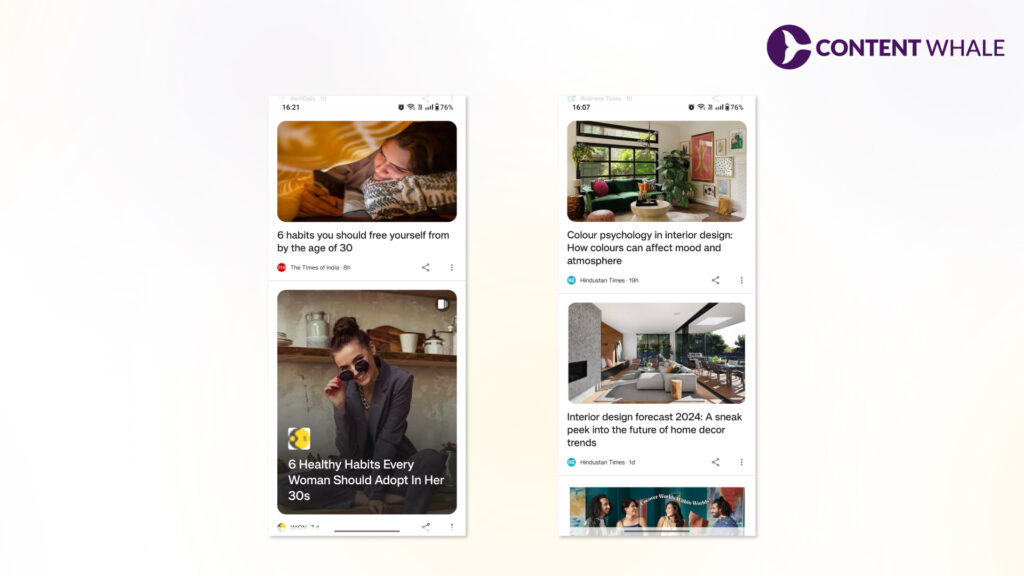
Google Discover provides personalized recommendations to its mobile users according to the user’s interests and activities. The feature is not based on any search terms or queries. The users access Google Discover via the Google app, mobile Google homepage, and Chrome.
Discover favors the pages which have good images and are updated frequently. Therefore, following SEO guidelines will be beneficial:
- Publish unique content for the defined audience’s interest.
- Make sure to have an appropriate headline for the page without using clickbait.
- Use large, high-resolution images for the page and use the max-image-preview:large robot directive.
- Have structured data and meta tags which help Google understand the content better.
- Keep updating the page content in accordance with Google’s policies.
2. Pass the Core Web Vitals
Passing Core Web Vitals is one of the best SEO practices you can measure with free tools. Core Web Vitals measure loading, interactivity, and visual stability on real pages. Google lists three current metrics: Largest Contentful Paint (LCP), Interaction to Next Paint (INP), and Cumulative Layout Shift (CLS) (Source).
A good score means an LCP within 2.5 seconds, an INP of 200 milliseconds or less, and a CLS of 0.1 or less, measured at the 75th percentile of page loads (Source). INP replaced First Input Delay as a stable Core Web Vital in 2024, so audits that still report FID are out of date.
Strong scores will not rescue a page that fails to answer the query. They remove friction for the pages that already deserve to rank.
To improve LCP:
- Use fast, reliable hosting and a content delivery network (CDN).
- Compress images, serve modern formats, and size them for the layout.
- Preload the main image and defer non-critical scripts.
- Lazy load images and videos below the fold.
To improve INP:
- Reduce the amount of JavaScript on the page and split large files.
- Break long tasks into smaller ones so the browser can respond to clicks.
- Remove third-party scripts that block the main thread.
To improve CLS:
- Set width and height attributes on images and videos so the browser reserves space.
- Reserve room for ads and embeds before they load.
- Preload key fonts and match fallback fonts to reduce layout shifts.
- Avoid inserting new content above existing content after load.
3. Write Relevant Meta Titles and Descriptions
Keyword-based meta tags are some of the best SEO techniques that you can use to enhance the presentation of your pages in the search results, and SEO best practices 2026 state that keyword-based meta tags are necessary for all your pages.
Meta title and descriptions provide a summary of your pages on the search result page, and they enable users to determine whether to click on the page. They also help the search engine engines to match your pages with the searches made. Our guide on great SEO title best practices provides all the necessary information about title formulas.
The following should be adhered to when writing a meta tag for all your pages:
- The target keyword and its variants should be put first in meta title and descriptions.
- Include modifiers like numbers, years, or adjectives in order to make the snippet specific.
- End your description with a call-to-action like “learn more” or “read now”.
- Titles should be within 50 to 60 characters.
- Descriptions should be within 150 to 160 characters.
- Each page must have a unique title and description.
Keywords usually overlap; search for them on Google, and if the results coincide, create a single page for both keywords.
4. Optimize for BERT and Natural Language
BERT (Bidirectional Encoder Representations from Transformers) is a natural language processing model that Google uses to understand the context of queries, especially long and conversational ones. It reads the words before and after a term, and it handles synonyms, slang, and intent.
Clear, accurate writing that matches the reader’s intent works best.
- Use natural, conversational language and skip jargon and keyword stuffing.
- Answer the reader’s question directly, then add evidence.
- Use headings, bullet points, and lists so readers can scan the page.
- Use synonyms and related terms to cover the topic fully.
- Add schema markup to increase the chance of rich results.
5. Build Content Quality and E-E-A-T
Content quality sits at the center of the best SEO practices, and it affects rankings, traffic, and conversions. Google’s quality guidelines describe E-E-A-T: Experience, Expertise, Authoritativeness, and Trustworthiness. Content shows experience when it includes first-hand examples, original data, and a named author with a profile.
Our marketing case study on 390% traffic growth through strategic SEO shows how a structured SEO program turns quality content into measurable results.
- Run keyword research and target queries your audience searches.
- Run a competitive analysis and find gaps in your market.
- Answer questions and solve problems with actionable steps.
- Cite credible sources and link to the original research.
- Add images, charts, and video where they clarify a point.
- Update content regularly to keep it accurate.

6. Win Featured Snippets
Featured snippets reward pages that apply the best SEO practices for structure and direct answers. Google shows them at the top of the results page. They appear as paragraphs, lists, tables, or videos, and each one includes the source URL.
A snippet raises visibility and authority even when the user does not click. To earn one, follow the steps below:
- Identify the queries in your niche that already trigger snippets.
- Place a direct answer of 40 to 60 words under a heading that matches the query.
- Use lists and tables for steps and comparisons.
- Add schema markup where it applies.
- Track results in Google Search Console and a rank tracker.
7. Target Long Tail and Related Keywords
Long tail targeting is one of the best SEO practices for newer sites with limited authority. Long tail keywords have three or more words and carry a more specific intent than short tail keywords. For example, “content writing services” is a short tail keyword, and “content writing services for small businesses” is a long tail keyword.
Related keywords, often called LSI keywords, share the context of your main keyword. For “content writing services”, related terms include content marketing, copywriting, and blogging.
Tools such as Ubersuggest and Google Keyword Planner find these terms, and our list of the best content writing tools compares more keyword research options.
- Place long tail keywords in the title, headings, introduction, and conclusion.
- Spread related keywords through the body paragraphs.
- Write for the reader first and avoid over-optimization.
8. Earn High-Quality Backlinks
Link building remains one of the best SEO practices. Backlinks are links from other websites to yours, and they remain one of the strongest SEO signals. A link from a relevant, reputable site carries more weight than many links from weak sites.
- Publish original research and useful guides that other sites want to cite.
- Promote content on social media, email, forums, and blogs.
- Build relationships with writers and editors in your niche, and offer guest posts and expert quotes.
- Use expert quote platforms such as Featured.com to earn editorial links.

9. Optimize Images with Alt Text
Images improve content and support SEO through image search, engagement, and conversions. Alt text describes the image for screen readers and gives search engines context.
- Use original, relevant images and avoid generic stock photos.
- Compress images with a tool such as TinyPNG and use modern formats.
- Name files descriptively and write alt text that describes what the image shows.

10. Run Regular SEO Audits
Audits keep the best SEO practices on this list from drifting out of date. An SEO audit analyzes your site’s performance and health and finds issues that hurt rankings, traffic, and conversions. A full audit also shows new opportunities.
- Use Google Search Console and Google Analytics to review performance.
- Use Google PageSpeed Insights or Lighthouse to test speed.
- Use Ahrefs, Semrush, or Moz to review keywords, content, and backlinks.
- Use Screaming Frog or Sitebulb to crawl for broken links, duplicate content, and missing tags.
If you want a specialist team to run the audit, see our SEO services.
SEO in 2026: 8 Critical Trends to Know

SEO 2026 rewards pages that answer the query in the first paragraph. The best SEO practices above also need to account for these top SEO trends, so build your SEO strategy 2026 around them. Our post on emerging SEO trends to watch in 2026 covers more of them.
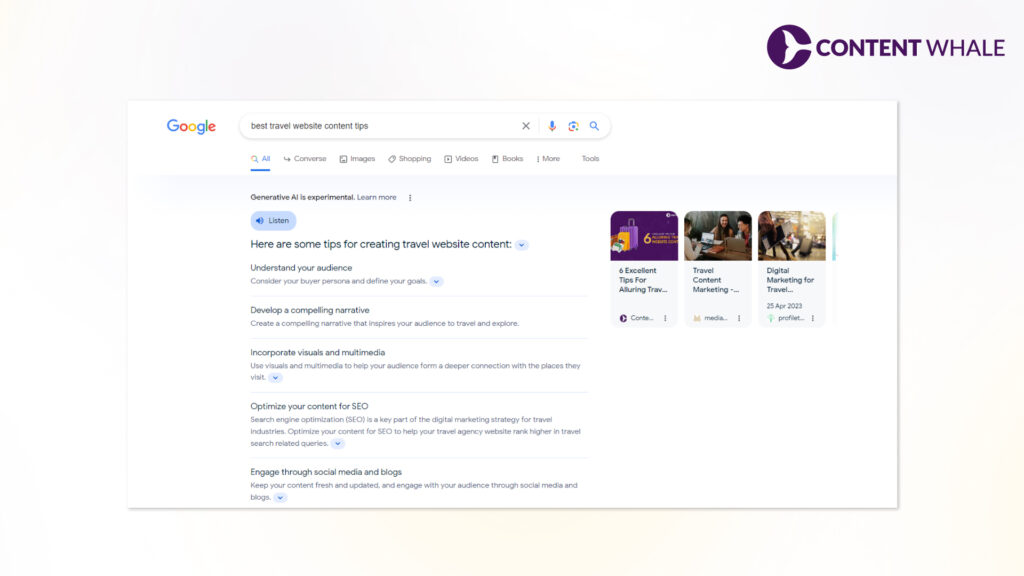
1. Google AI Overviews and AI Mode
Google AI Overviews features an AI-generated summary on top of many search results pages. According to Pew, around one out of five Google searches in March 2025 returned an AI summary (Source). AI Overviews and AI Mode are now replacing the Search Generative Experience previously discussed in this post.
- Generate content that meets intent and provides something new.
- Utilize structured data and schema markup.
- Include images, video, and text in such a way that each contributes to the answer.
- Keep it in plain language and free of jargon.
2. Zero-Click Searches
Zero-click searches answer the user on the results page through featured snippets, knowledge panels, local packs, and AI summaries. They reduce clicks, and they also raise brand visibility when your page supplies the answer.
- Identify the queries in your niche that trigger zero-click results.
- Answer each query directly and concisely.
- Add schema markup so search engines can read the page.
3. Answer Engine and Generative Engine Optimization
Answer engine optimization (AEO) prepares content for voice assistants such as Google Assistant, Siri, and Alexa, and for AI answer tools such as ChatGPT, Gemini, and Perplexity. Researchers from Princeton and other institutions introduced generative engine optimization and reported that its methods can boost visibility in generative engine responses by up to 40% (Source).
- Use natural, conversational language and short sentences.
- Find real audience questions with AnswerThePublic, AlsoAsked, or QuestionDB.
- Add FAQ sections and schema markup.
- Optimize for local search if you serve a local audience.
4. Topical Authority
Topical authority describes how completely your site covers a topic. Google does not publish it as a ranking factor, but complete coverage gives readers and search engines more reasons to trust your site.
- Research the main keyword and its related subtopics.
- Publish content that covers each subtopic in depth.
- Group content into clusters that link to a pillar page. A pillar page covers the main topic and links to each cluster page.
5. Video SEO
Video SEO optimizes videos so they rank in search results and in video platforms. Original, well-described videos give pages another format that can earn visibility.
- Create original videos that match your brand and avoid generic stock footage.
- Compress videos without losing quality.
- Write descriptive, keyword-rich titles, descriptions, and tags.
- Add captions, transcripts, and subtitles for accessibility.

6. Search Engine Ranking Signals in 2026
Google does not publish a weighted list of ranking factors, but four signals appear in nearly every SEO discussion.
- Site authority: Quality backlinks and a trustworthy reputation build it, and spammy links damage it.
- Content quality: Relevant, original content that meets the user’s needs ranks better. Our website content writing services cover this for teams that lack writing capacity.
- Mobile-friendliness: Test pages with Lighthouse and PageSpeed Insights.
- User experience: Track problems with Hotjar or Google Analytics.
7. Updating Your Existing Content
Updates for existing pages involve modifying old content pages such that they reflect new search intent and facts. The process helps improve content quality, user experience, and topical authority at a lesser cost compared to creating a fresh page.
SEO tips 2026 begin from your existing pages. From our experience at Content Whale, the quickest update process begins from Google Search Console. Filter through the URL, click on the Queries tab, then pick the top 10 queries by clicks and impressions.
- Locate pages with declining clicks in Google Search Console, Analytics, or Ahrefs.
- Update the content to reflect new intent, information, and examples.
- Publish an updated page with a clear modification date and repromote it.
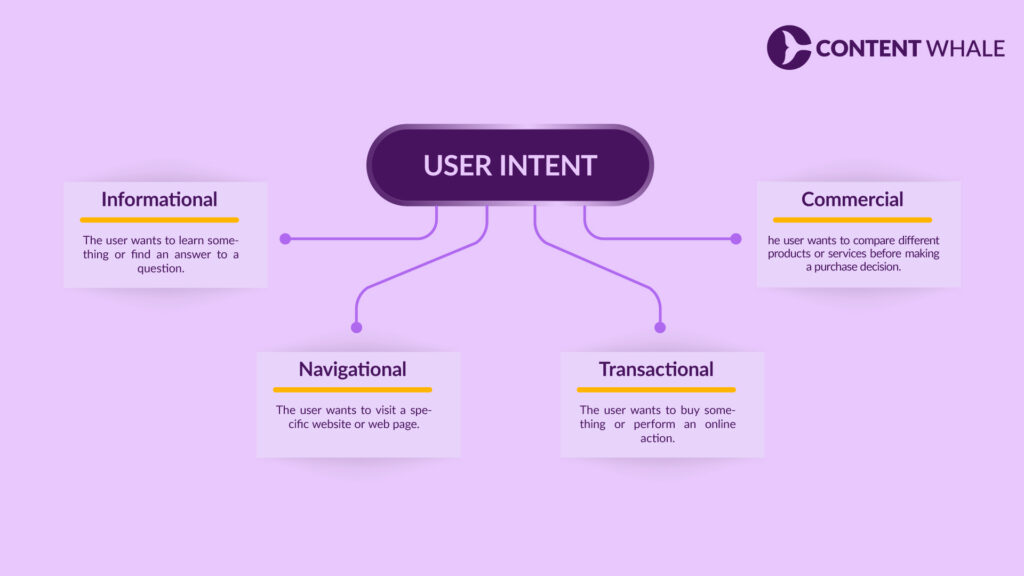
8. Approaching User Search Intent
User search intent is the goal behind a query. It falls into four types: informational, commercial, transactional, and brand lookup. Matching intent raises rankings, traffic, and conversions because the page attracts the right visitors and answers the question that brought them.
- Run keyword research, then search each keyword and review which content ranks.
- Create content that targets the keyword and its intent.
- Add schema markup to give Google context.
Summing Up
SEO in 2026 evolves according to the evolution of the search engines themselves as well as user behavior. The optimal SEO techniques listed in this guide can provide a good foundation for any website: valuable content, fast loading speed, well-written meta tags and updating.
Check the SEO techniques in your guide every quarter, check the search console queries versus the pages that are ranking and update those pages where the content is not addressing the question that leads the users to the page.
The additional factor that comes with AI search is the requirement for direct answers, citing information and clear expertise as the engines start to quote pages and not only to show them.
Use the SEO guide 2026 checklist, or learn about the performance of our structured SEO program from the 390% traffic growth case study. Talk to a Content Whale expert today for free advice on your SEO content plan.
FAQs
What are the best SEO practices for 2026?
The best SEO practices for 2026 are matching search intent, publishing content with first-hand expertise, passing Core Web Vitals, writing keyword-first meta tags, adding structured data, and updating pages regularly. Add direct answers for AI search, and audit the site each quarter. Use these SEO tips 2026 as a starting checklist.
What are the top 5 SEO strategies?
The top 5 SEO strategies are keyword research, content creation, content optimization, link building, and technical SEO.
What are the 3 Cs of SEO?
The 3 Cs of SEO are content, code, and credibility. Content responds to the query, code is about site speed and crawlability, and credibility is about authority and trust via links, reviews, and expertise.
Will SEO exist in five years?
Yes. SEO will exist in five years because people will always need answers to their queries, products or services. The way SEO will be conducted will be different because new algorithms, new artificial intelligence features and new search platforms will be developed. So it is important to make sure that your SEO best practices list is updated yearly.
Will AI kill SEO?
No. AI modifies how search results will appear and how people will ask for information, but it also brings new opportunities for visibility in searches. AI helps with conducting research, writing and checking your work on the technical level, but humans still add expertise and accuracy in content and edits.
SEO: Is It Still Worth It In 2026?
Yes. SEO is one of the most cost-efficient methods to increase organic traffic and bring visitors interested in your product or services. You’ll need months to see the results, which is why you can benefit from using a specialist team or SEO guide 2026.
What Are The 3 Most Important Factors Of SEO?
Three factors of SEO include content, backlinks, and technical SEO.
What Are The Top SEO Trends For 2026?
Some of the top SEO trends for 2026 include Google AI Overviews and AI Mode, zero-click searches, answer and generative engine optimization, topical authority, and video SEO.
What Is An SEO Strategy?
SEO strategy includes a set of actions aimed at creating, optimizing, and promoting the content to rank it higher in the SERP and to attract more organic traffic. An SEO strategy 2026 plan looks like this:
- Create a keyword list.
- Analyze Google’s first page for every keyword.
- Create something unique and better than the existing pages.
- Add the hook that deserves the click and engages the user.
- Optimize the page according to on-page SEO and search intent.
- Work on content design, links building, and updating the page.





 Content Whale – USA


