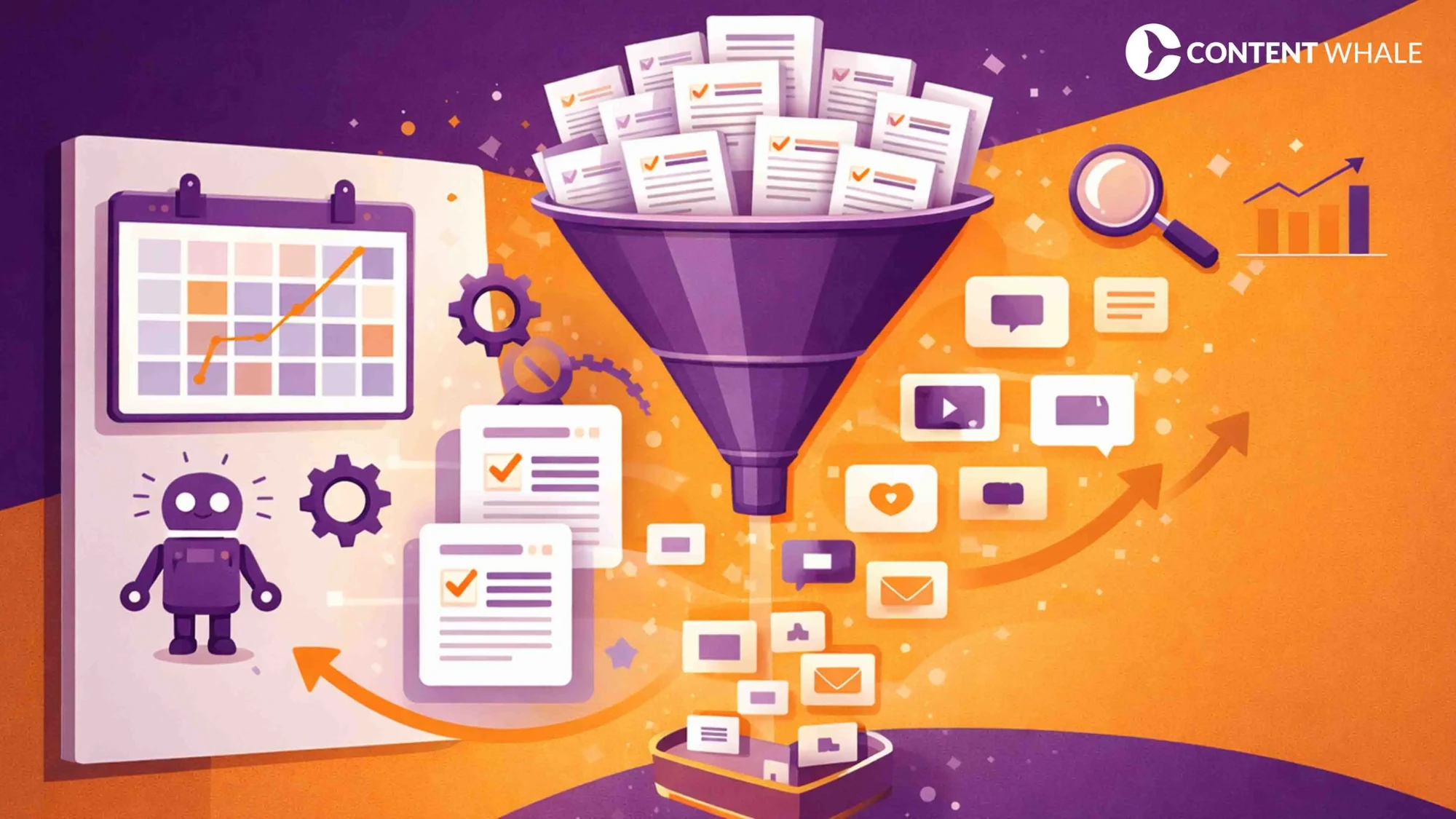
Manual email marketing creates operational bottlenecks that limit campaign scalability and prevent businesses from capitalizing on timing-sensitive opportunities. Traditional email deployment processes require manual list selection, content approval, and scheduling coordination. AI-powered automation eliminates these constraints by processing customer data at scale, predicting optimal engagement windows, and automating email deployment without human intervention.
Marketing automation delivers $5.44 for every dollar invested, translating to a 544% return on investment. Email marketing specifically generates $36 for every $1 spent, establishing it as one of the highest-performing digital channels. Data shows 63% of marketers utilize AI tools in their email marketing operations, while 47% use AI to generate entire email marketing campaigns. Research confirms that 51% of marketing professionals believe AI-supported email marketing outperforms traditional manual approaches(Source).
This guide explains how AI automation improves email marketing outcomes, reduces operational costs, and optimizes email deployment through data-driven strategies.
How AI Email Marketing Automation Works

Core Technical Capabilities
AI email marketing systems operate through three fundamental capabilities:
- Data Processing: Machine learning algorithms analyze historical customer behavior patterns to identify correlations between specific actions and conversion outcomes
- Predictive Modeling: Systems process variables including past purchase history, browsing behavior, email engagement patterns, demographic attributes, and temporal factors
- Automated Execution: Automation infrastructure triggers email deployment based on predetermined conditions without manual intervention
Types of Automated Triggers

Behavioral Triggers
- Cart abandonment recovery
- Product view follow-ups
- Account creation sequences
- Subscription milestone messages
Temporal Triggers
- Time elapsed since previous interactions
- Calendar-based events
- Anniversary and birthday campaigns
Predictive Triggers
- Machine learning models identify optimal send times
- Individual recipient engagement pattern analysis
- Historical behavior-based timing optimization
Content Optimization Through AI
Advanced natural language processing enables automated content generation and optimization. AI-driven subject line optimization improves click-through rates by 13% compared to manually crafted alternatives (Source). These systems test multiple variations simultaneously and allocate send volume to top performers in real-time.
Smart Segmentation
Segmentation algorithms cluster recipients into micro-audiences based on behavioral similarities rather than static demographic categories. Academic research analyzing 5,765 promotional emails sent to 455 million users across 73 countries found that sophisticated segmentation techniques significantly affect individual attention to email marketing messages (Source). AI systems recalculate these segments continuously as new behavioral data accumulates.
Measurable Performance Improvements from AI Automation

Email Engagement Metrics
Automated emails achieve 42.1% open rates and 5.4% click rates, substantially exceeding industry benchmarks for manually deployed campaigns. These improvements stem from precise timing optimization and behavioral relevance.
Key Performance Indicators:
- Open rates: 42.1% for automated campaigns vs. 15-25% for manual
- Click-through rates: 13% improvement with AI optimization
- Click-to-open rates: Consistent double-digit advantages over broadcast messages
Revenue Generation Impact
Automated emails generate 320% more revenue than non-automated alternatives. Email marketing delivers a median ROI of 122%, with retail and ecommerce sectors reaching 4,500% ROI ($45 per dollar invested) (Source).
Industry-Specific ROI Performance:
- Retail and ecommerce: $45 per $1 spent
- Overall average: $36 per $1 spent
- B2B sector: Variable returns with 21% achieving $40+ per $1
Lead Generation and Conversion Rates
Companies implementing marketing automation generate 80% more leads and achieve 77% higher conversion rates compared to manual processes. 76% of companies see positive ROI within the first year, with 44% recovering initial investment costs within six months.
Lead Performance Metrics:
- 80% increase in lead generation
- 77% higher conversion rates
- 451% increase in qualified leads
Operational Efficiency Gains
AI automation saves marketers up to 30% of total working time previously consumed by content creation, send time optimization, and list management. Some implementations demonstrate 90% reductions in production time for regular newsletter deployment.
Time Savings Breakdown:
- Content creation: 30% reduction in production time
- Newsletter deployment: Up to 90% faster in specialized cases
- Routine tasks: 6+ hours saved per week
- Response time: 90% reduction in email response cycles
Market Growth Indicators
The marketing automation market is valued at $6.65 billion in 2024, projecting growth to $15.58 billion by 2030 at a compound annual growth rate of 15.3%. Email marketing revenue specifically is expected to reach $12.3 billion in 2024, demonstrating sustained industry confidence.
Strategic Implementation of Email Marketing Automation
Workflow Mapping and Touchpoint Identification
Effective automation begins with identifying high-value customer lifecycle touchpoints:
- Welcome sequences for new subscribers
- Abandoned cart recovery for ecommerce
- Re-engagement campaigns for dormant contacts
- Post-purchase follow-ups and review requests
- Renewal reminders and upsell opportunities
Data Infrastructure Requirements
AI systems require clean, structured customer data across multiple touchpoints. Research shows the seo-measurement-implementation-guide/”>performance gap between top-quartile and bottom-quartile email marketing programs widened 37% over the past three years, primarily driven by data quality and integration sophistication.
Essential Data Sources:
- Website behavior tracking
- Email engagement metrics
- Purchase history and transaction data
- Customer service interactions
- Product browsing patterns
Trigger Architecture Design

Behavioral Triggers:
- Product view sequences
- Download confirmation workflows
- Form submission responses
- Shopping cart modification alerts
Time-Based Triggers:
- Three-day post-purchase review requests
- Seven-day cart abandonment follow-ups
- Annual renewal date reminders
- Birthday and anniversary campaigns
Predictive Triggers:
- Machine learning-based send time optimization
- Individual recipient engagement windows
- Historical pattern-based timing
Content Personalization Strategy
Personalized emails generate transaction rates 600% higher than non-personalized versions. AI systems dynamically assemble email content from modular components tailored to recipient preferences.
Personalization Elements:
- Dynamic product recommendations
- Location-specific offers and content
- Behavioral messaging based on browsing history
- Price optimization and exclusive discounts
- Customer segment-specific creative assets
Testing and Optimization Framework
Automated A/B testing systems increase email marketing ROI by 37% compared to organizations deploying campaigns without testing protocols.
Testing Variables:
- Subject line variations
- Send time optimization
- Content format testing
- Call-to-action placement
- Email design and layout
- Sender name experiments
How Content Whale Delivers AI-Driven Email Marketing Results
Comprehensive Data Analysis
Content Whale begins with in-depth customer data analysis to identify behavioral patterns, engagement preferences, and conversion pathways specific to your audience. Our approach combines:
- Historical performance analysis
- Audience segmentation modeling
- Behavioral pattern identification
- Conversion pathway mapping
Automated Workflow Architecture
We design trigger-based workflows that deploy relevant messages based on customer actions, purchase patterns, and engagement history:
Workflow Components:
- Multi-step nurture sequences
- Behavioral trigger configuration
- Conditional logic implementation
- Cross-channel coordination
AI-Enhanced Content Generation
Our content systems produce personalized email copy optimized for recipient preferences while maintaining brand voice consistency:
- Dynamic subject line testing
- Personalized body content
- Product recommendation engines
- Call-to-action optimization
- Visual content selection
Dynamic Segmentation Strategy
Machine learning clusters recipients based on behavioral similarities rather than static demographic categories:
- Real-time segment updates
- Behavioral clustering algorithms
- Purchase pattern analysis
- Engagement-based grouping
Integration Capabilities
Connect email automation with existing marketing technology stacks:
- CRM platform integration
- Ecommerce system connectivity
- Analytics tool synchronization
- Marketing automation platform setup
Conclusion
AI-powered email marketing automation transforms campaign execution from manual processes to scalable systems that deliver 544% ROI on marketing automation investments and $36 returns for every dollar spent on email marketing. Organizations implementing sophisticated automation achieve these results through precise targeting, optimal timing, and personalized content delivery that manual processes cannot replicate.
The widening performance gap between sophisticated and basic programs indicates strategic implementation matters more than tool selection. Success requires comprehensive systems encompassing data collection, predictive modeling, content personalization, and continuous optimization.
Ready to transform your email marketing ROI through AI-powered automation? Contact Content Whale to develop a data-driven strategy that delivers measurable business results.
Frequently Asked Questions
1. How does AI improve email marketing ROI compared to manual approaches?
AI automation improves email marketing ROI through precise timing optimization, behavioral targeting, and personalized content delivery at scale. Research demonstrates marketing automation delivers $5.44 for every dollar invested, while email marketing specifically generates $36 per dollar spent. These improvements stem from AI’s ability to analyze customer behavior patterns, predict optimal engagement windows, and personalize content for individual recipients without manual intervention. Automated systems process millions of data points to identify timing and content combinations that maximize open rates, click-through rates, and conversions.
2. What percentage of email marketers currently use AI automation tools?
Current data indicates 63% of marketers utilize AI tools in their email marketing operations. Forbes reports 47% of email marketers use AI to generate complete campaigns (Source). Statista data from 2023 shows 51% of marketing professionals believe AI-supported email marketing outperforms traditional approaches in effectiveness metrics. These figures demonstrate widespread industry adoption rather than experimental implementations, reflecting confidence in AI automation’s ability to deliver measurable performance improvements.
3. How long does it take to see ROI from email marketing automation?
Research indicates 76% of companies implementing marketing automation see positive ROI within the first year. Approximately 44% recover initial investment costs within six months. The speed of ROI realization depends on factors including data quality, workflow sophistication, audience size, and integration with existing systems. Organizations with clean customer data, well-designed trigger architectures, and established email programs typically see faster returns than those building infrastructure from scratch.
4. What email marketing metrics improve most significantly with AI automation?
Open rates show substantial improvements under AI automation, with automated campaigns achieving 42.1% open rates compared to industry averages of 15-25% for manual campaigns. Click-through rates improve by 13% through AI-driven optimization. Conversion rates increase by 77% with automation implementation. Revenue per email shows the most dramatic improvement, with automated sequences generating 320% more revenue than non-automated alternatives. These improvements compound across large recipient lists, explaining the exceptional ROI figures for email marketing automation.
5. Can small businesses achieve similar ROI from email marketing automation as enterprises?
Research indicates small businesses see a 25% increase in marketing ROI when implementing automation. The financial returns from email marketing automation scale effectively for smaller organizations because the technology eliminates manual labor rather than requiring proportional resource increases. Organizations investing $100 or less monthly in email marketing achieve $21 ROI per dollar invested, while those investing up to $500 gain $31 per dollar. The key success factor is strategic implementation focused on high-value touchpoints rather than automation complexity or tool sophistication.