



 BFSI
BFSI HealthCare
 Edtech
 SaaS
SaaS Automobile
 Travel
Google’s Search Generative Experience now appears in 84% of searches according to research published in the Journal of Marketing Analytics. Organic traffic is dropping. Zero-click results are increasing. Business owners are panicking because their rankings no longer translate to website visits.
SEO isn’t dead—it’s splitting into three distinct disciplines that require different strategies, different metrics, and different content approaches. This guide will break down what’s replacing traditional SEO and how to adapt your strategy for AI-based SEO before your competitors do.
Why People Think SEO Is Dead?
 ChatGPT search optimization” width=”1920″ height=”1080″ />
Zero-Click Searches Dominate Results
SparkToro’s 2024 analysis using data from Datos reveals that for every 1,000 Google searches in the US, only 360 result in clicks to non-Google websites (Source). Featured snippets, People Also Ask boxes, and AI Overviews extract the information users need before they reach your site. Google answers the question directly on the results page. Users get what they need without clicking through.
Traffic is declining specifically for informational queries where Google can provide immediate answers. Your content still ranks, but rankings no longer guarantee traffic. Zero-click searches represent the largest shift in search behavior since mobile queries overtook desktop in 2015. The competition shifted from ranking first to being the source Google cites in its direct answers.
AI Search Platforms Bypass Google Entirely
ChatGPT, Perplexity, and Bing Chat are growing faster than any search engine in history. OpenAI and Harvard’s National Bureau of Economic Research study shows ChatGPT reached 700 million weekly active users by July 2025, processing 2.6 billion messages daily (Source). Users ask questions directly to AI platforms instead of typing queries into Google. Traditional ranking signals: backlinks, domain authority, page speed don’t determine which sources AI platforms cite. The algorithms evaluating your content have changed completely.
AI-based SEO requires optimization for language models, not search engine crawlers. Your old tactics don’t work in conversational interfaces where AI synthesizes information from multiple sources. The shift happened faster than the mobile revolution. Businesses that ignore AI search optimization strategies will lose visibility within months, not years.
What Actually Comes After SEO?
Large Language Model Optimization
Large language model optimization focuses on getting cited by AI platforms like ChatGPT, Claude, and Gemini. Research published in the Association for Computational Linguistics demonstrates that LLMs systematically favor highly cited papers when generating references, preferring more recent works with shorter titles (Source).
Your content must be authoritative enough that AI platforms trust it as a reference source. Schema markup now feeds AI training data, not just search engine understanding. The language models read your structured data to understand context, relationships, and credibility signals that determine citation worthiness.
Generative engine optimization by focusing on:
- Quotable expert statements that AI can extract cleanly without context loss
- Clear attribution for every claim you make with verifiable sources
- Structured data that language models can parse automatically
- Content depth that provides comprehensive coverage, not surface-level summaries
AI platforms prioritize sources that other credible sites reference. Your backlink profile still matters, but the quality threshold is higher. A single citation from an academic journal carries more weight than 100 links from content marketing blogs. Semantic search algorithms evaluate topical authority by analyzing how thoroughly you cover a subject compared to competing sources.
The difference between traditional SEO and AI based seo lies in verification. AI platforms cross-reference every claim against multiple sources before citing your content.
Answer Engine Optimization
Answer engine optimization targets direct responses in AI tools. ArXiv research on enabling LLMs to generate text with citations found that current systems lack complete citation support 50% of the time for information-seeking queries (Source). AEO differs from large language model optimization in scope and intent. LLM optimization aims for comprehensive citations in detailed responses. AEO targets immediate answers to specific questions. The format matters more than the depth.
Structure your content using:
- Question-answer pairs that mirror how users phrase queries
- First-person expertise signals that establish credibility
- Concise paragraphs that AI can extract without editing
- Entity relationships that connect your content to verified knowledge graphs
Entity-based SEO matters more in AEO because AI platforms verify information against knowledge graphs. Your content needs to align with established entities: people, places, concepts that exist in Wikipedia, Wikidata, and other authoritative databases. When you make claims about entities, AI platforms cross-reference those claims against multiple sources. Inconsistencies reduce your citation probability.
AI search optimization strategies depend on your ability to create content that AI platforms can verify and trust without additional fact-checking. The verification process happens in milliseconds, so your entity data must be clean and consistent.
The Three Pillars of Post-SEO Strategy
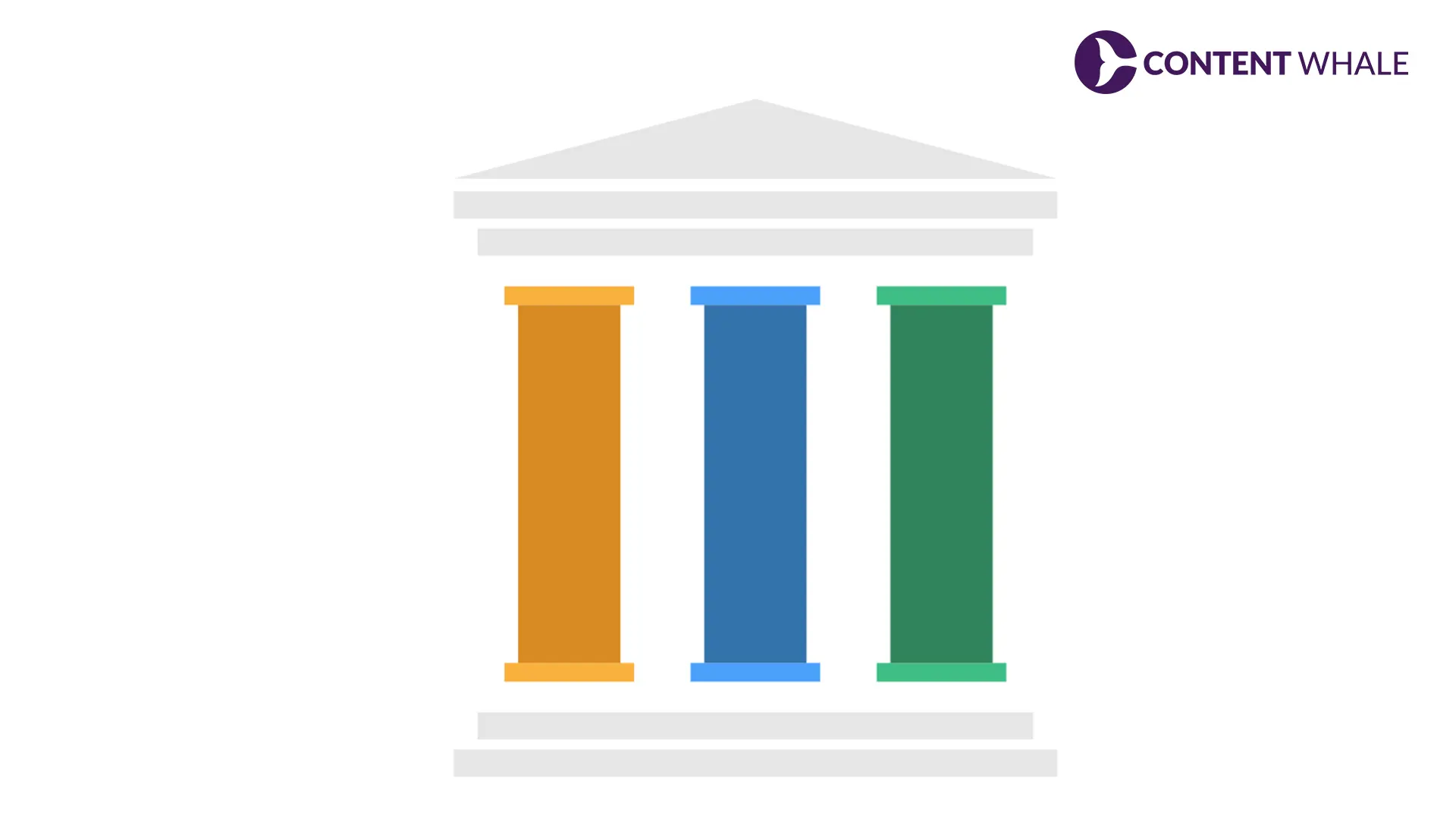
Pillar 1 – Multimodal Content Creation
Google Lens processes 12 billion visual searches monthly according to Google I/O 2024 announcements (Source). Video, image, and audio search represent 40% of all queries. Users search by uploading photos, speaking questions, and watching videos with embedded questions.
Your text-only content strategy leaves you invisible in nearly half of all searches. Research from the Computer Vision and Pattern Recognition conference demonstrates that visual search mechanisms enhance multimodal reasoning and contextual understanding in AI systems (Source).
Alt text needs to describe context, not just objects. Instead of “man holding phone,” write “customer scanning QR code for mobile payment at retail checkout.” Video transcripts require timestamps that AI can reference when citing specific moments. Audio content needs proper metadata that search algorithms can index. Visual schema markup tells AI platforms what images contain and how they relate to your written content. YouTube SEO overlaps with traditional search because Google prioritizes video results for how-to queries and product comparisons.
Multimodal search will dominate voice search optimization as smart speakers add screens and AI assistants process images alongside text queries. The convergence of search modalities means your content needs to exist in multiple formats simultaneously.
Pillar 2 – Authority and Entity Recognition
Google shifted from keywords to entities in 2012 with the Knowledge Graph launch, but most businesses still optimize for keywords. Research on entity-based search shows that content from recognized entities receives preferential treatment in Google’s algorithms through E-E-A-T evaluation frameworks (Source).
Entity recognition determines whether AI platforms cite your content or ignore it completely. Your domain authority no longer matters if you’re not recognized as a credible entity.
Build entity authority through:
- Wikipedia presence that establishes you as a notable entity
- Wikidata structured information linking your entity to related concepts
- Knowledge panel optimization that consolidates your entity information
- Author entity establishment that separates individual expertise from company authority
Personal brands outrank company pages for expertise-based queries. Users trust individuals more than organizations. AI platforms cite individuals more frequently because authorship provides accountability. Entity-based SEO requires consistent NAP (name, address, phone) information across all platforms.
Inconsistent entity data confuses semantic search algorithms and reduces citation probability. Your entity must exist in multiple authoritative databases with matching information.
Pillar 3 – Platform-Specific Optimization
Search fragmented across platforms. Gen Z searches on TikTok before Google. Buyers check Reddit for product reviews. B2B researchers start on LinkedIn. Your single-channel SEO strategy misses 60% of your potential audience. Each platform requires different optimization approaches. TikTok prioritizes watch time and engagement. Reddit values authentic discussion and user karma. LinkedIn rewards thought leadership and professional credentials.
Distribution strategy matters more than single-channel excellence. Your content needs to perform on the platforms where your audience actually searches. Native platform content outperforms cross-posted material because algorithms detect and penalize lazy distribution.
A LinkedIn article written specifically for that platform beats a blog post copied into LinkedIn’s interface. Platform-specific optimization means creating content in the format, tone, and style each platform rewards. AI-based SEO extends beyond Google to every platform where users search for information.
How to Audit Your Current Strategy?
Identify Your Traffic Vulnerabilities
Check zero-click rates in Google Search Console under the Performance tab. Filter by query type to see which content categories lose traffic to featured snippets. Your informational content faces the highest risk. Analyze which competitors appear in AI Overviews for your target keywords. Review featured snippet losses month-over-month to identify trends. Track brand versus non-brand search trends to measure overall visibility decline.
Run this audit checklist:
- Featured snippet coverage ratio (your snippets divided by total available snippets in your niche)
- AI Overview appearance frequency for your primary keywords
- Click-through rate trends by query type over the past 12 months
- Competitor citation rates in AI responses for your core topics
Traffic vulnerabilities show up differently across content types. Product pages lose less traffic than blog posts. Transactional queries maintain click-through rates while informational queries collapse. Your audit reveals which content needs immediate optimization and which content can wait. Sites with strong transactional content survived the zero-click era better than information-only publishers.
Test Your Content in AI Platforms
Query your target keywords in ChatGPT, Perplexity, and Gemini. Check if your content appears in AI citations. Note which competitors appear more frequently and in what context. Document the exact language AI uses when citing sources. This manual testing reveals patterns that analytics tools miss.
Test systematically:
- Search your primary keywords and variations
- Ask questions your customers ask
- Request comparisons between your product and competitors
- Query industry terms where you have expertise
Generative engine optimization by understanding how AI platforms select and cite sources. ChatGPT search optimization requires different approaches than Perplexity optimization. ChatGPT favors comprehensive sources with clear structure. Perplexity prioritizes recent content with specific data points. Answer engine optimization succeeds when you match your content format to each platform’s citation preferences.
Track which topics generate citations and which topics get ignored. Your testing data guides AI search optimization strategies more accurately than keyword research tools built for traditional SEO.
How Content Whale Can Help
Content Whale specializes in AI based SEO techniques that perform across both traditional search and AI platforms. Our services include AI-optimized content with academic sourcing, multimodal content frameworks, and entity-based content clusters.
We’ve helped clients maintain visibility during the transition from keyword-focused SEO to generative engine optimization and answer engine optimization. Our custom frameworks ensure your content performs in SGE, ChatGPT, and Perplexity while maintaining traditional rankings.

Conclusion
SEO evolved into three distinct practices: large language model optimization, answer engine optimization, and multimodal optimization. Early adopters will dominate the next phase of search while late movers lose traffic to competitors who adapted faster. Start by auditing your zero-click rates and testing your content in AI platforms.
Partner with Content Whale to build your AI search optimization strategies before your competitors do.
FAQs
1. Is traditional SEO completely dead in 2025?Â
No. Traditional SEO still drives traffic, but its effectiveness is declining for informational queries. Transactional and navigational searches still rely on standard ranking factors like page speed, mobile optimization, and structured data.
2. What is large language model optimization?Â
Large language model optimization is the practice of optimizing content to be cited and referenced by AI platforms like ChatGPT, Gemini, and Perplexity instead of just ranking in Google. It focuses on authoritative sourcing, structured data, and comprehensive topic coverage.
3. How do I optimize for ChatGPT search?Â
Focus on authoritative sourcing, clear attribution, structured data, and expert-level content depth. ChatGPT prioritizes credible, well-cited sources with clear authorship. Use schema markup and create quotable expert statements.
4. What’s the difference between large language model optimization and answer engine optimization?Â
Large language model optimization focuses on getting cited in comprehensive AI responses that synthesize multiple sources. Answer engine optimization targets direct, immediate answers to specific questions. LLM optimization requires broader topic coverage while AEO needs concise, question-answer formatting.
5. Should I stop doing traditional SEO?Â
No. Maintain your traditional SEO while adding AI based SEO/large language model optimization and answer engine optimization tactics. Search behavior is fragmenting, not disappearing. Transactional queries still convert through traditional search results. A hybrid approach performs best across all search channels.





 Content Whale – USA


