




 BFSI
BFSI HealthCare
 Edtech
 SaaS
SaaS Automobile
 Travel
The best content marketing tools for 2026 are HubSpot, Semrush, BuzzSumo, Canva, CoSchedule, Grammarly, and Trello. Each one covers a separate stage: planning, keyword research, topic discovery, design, scheduling, editing, or task tracking. Start with the stage that slows your team down most.
Search data shows why the tools content marketing teams rely on affect traffic. The average page ranking first also appears in the top 10 for nearly 1,000 other keywords, according to an Ahrefs study of 3 million searches (Source).
Position carries equal weight. A Sistrix analysis of more than 80 million keywords found a 28.5% click-through rate for the first organic result in Google Search, more than ten times the rate of the tenth result on the first page (Source).
These innovative marketing tools shorten the path from a keyword to a ranking page. This guide will explore what each of the seven does, which team size it suits, and how to choose between them.
How We Picked These Content Marketing Tools?
We built this list around the workflow behind our Jidoka Technologies project. The team researched more than 6,600 keywords before writing a single post, then ran monthly Screaming Frog audits and tracked organic users in GA4 and Search Console.
Each of these top content marketing tools passed three tests:
- It covers one distinct stage of the content workflow.
- It connects to the apps your team already uses.
- It produces data you can check against Search Console.
Our own blog refresh process starts in Google Search Console. Search Console is free. We filter by the exact URL, open the Queries tab, and pull the ten queries with the most clicks and impressions, because those are keywords the page already ranks for in Google. That list decides which tool the page needs next.
For writing-specific software, read our guide to the best content writing tools.

1. HubSpot: Content Marketing Software for All-in-One Workflows
HubSpot is content marketing software that joins a CRM, content management, and marketing automation in one platform. Its Content Hub keeps every asset in one place, so writers, editors, and designers always work from the latest version of each file, brief, and campaign page.
The CRM records customer interactions, which lets marketers personalize emails and landing pages around real behavior. It also runs A/B tests. Beyond content creation, HubSpot adds lead capture forms, SEO recommendations, and email marketing, so a small team can run a campaign from first draft to qualified lead without leaving the dashboard.
- Email marketing and social media management
- Advanced analytics and reporting
- Content Hub for central asset storage
Best for: teams that want content, email, and CRM data in a single system.

2. Semrush: Keyword Research and Content Optimization
Semrush is one of the best tools available for content marketing when planning based on keyword analysis. This tool offers keyword research, competitor analysis, and content optimization through just one account.
Start by running the audit. Through Site Audit, technical SEO problems are detected in the domain, and through Traffic Analytics and Trends, you get to know how the competition gains visibility in your industry in order to make changes to your content marketing plan before things get out of hand.
Using its Keyword Gap tool, you get a list of the keywords ranked by your competitors and not by your domain. Before you start editing your existing content, check this list against your Search Console queries.
- Keyword Magic Tool for keyword variations
- Site Audit for technical SEO issues
- Position Tracking for ranking changes over time
Best for: SEO-led teams that plan content from keyword data.

3. BuzzSumo: Topic and Trend Discovery
BuzzSumo is one of the best options for content marketing research since it provides insight into the content that has been shared the most across all channels related to the topic or the industry of interest. Authors use it to identify an angle that works before starting work on their draft.
Start by filtering by date. Influencers are the users who share content within the same niche, which will help in building an outreach campaign. Engagement analytics provide insights into the types of formats, headlines, and channels that have been shared the most.
- Content discovery across platforms
- Influencer identification and outreach
- Engagement analytics by format and platform
Best for: editors who plan topics and outreach around proven demand.
4. Canva: Visual Content Creation
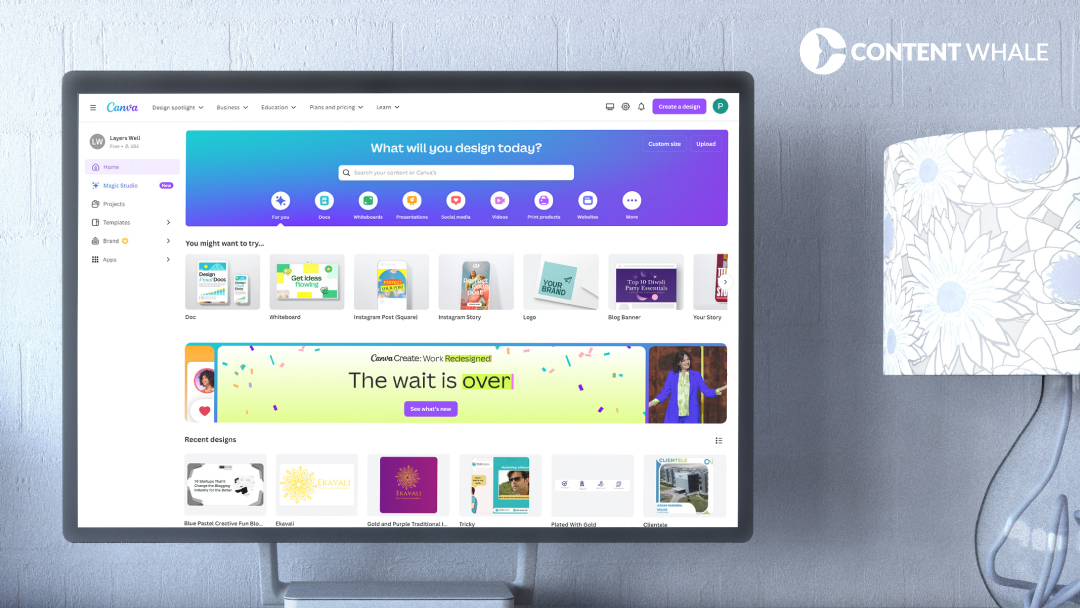
Canva is one of the innovative marketing tools that let marketers build images, infographics, and social media graphics in a drag-and-drop editor with a wide library of templates. Users need no design degree.
Teams can edit one design together. Canva Pro adds a Content Planner for scheduling social posts and a Brand Kit that keeps colors, fonts, and logos consistent across every design a team publishes, while Magic Media generates custom graphics from text prompts.
- Drag-and-drop editor with templates
- Content Planner and Brand Kit in Canva Pro
- Magic Media for AI-generated graphics
Best for: marketers without a dedicated designer.

5. CoSchedule: Editorial Calendar and Scheduling
CoSchedule is a planning and scheduling tool that includes an editorial calendar, social media scheduling, and marketing automation. CoSchedule is among the content strategy tools that link planning and publishing because it allows marketers to plan, develop, and publish everything using one platform while connecting social media posts, blog posts, and campaigns on one calendar for everyone to see and work with.
ReQueue automates repeated posts. The analytics of the previous post’s performance allow marketers to improve future posts. Integration with Google Docs and WordPress helps authors write in these familiar platforms and publish using the schedule created in the calendar so that no one needs to duplicate the content manually.
- Editorial calendar and social scheduling
- ReQueue for automated repeat posting
- Google Docs and WordPress integrations
Best for: small and mid-sized teams that need a shared publishing calendar.

6. Grammarly: Editing and Brand Voice
One of the means of editing the content marketing content is Grammarly which performs checks on grammar and spelling, style recommendations, and plagiarism scans while you write. Grammarly operates within Google Docs and Microsoft Word, thus preserving the usual workflow of a writer.
Suggestions are made automatically. Custom style guides ensure the brand voice uniformity of every member of a writing team, and it becomes especially relevant in case there are freelance writers, in-house editors, and agency colleagues working for the same blog.
Generative AI functionality allows drafting and rephrasing text, but the human editor should verify the facts and sources first.
- Grammar, spelling, and style checks
- Plagiarism detection
- Custom style guides for brand voice
Best for: teams that publish at volume and need one consistent voice.

7. Trello: Content Workflow Management
Trello is a tool for content marketing which organizes projects in boards, lists, and cards. The editor assigns tasks, sets deadlines, and follows the development of each article from an idea to the final product.
Cards include all files. Integration with Google Drive, Dropbox, and Slack provides all information about the document and its discussion within the card. Also, Power-Ups such as Mailchimp integration and such templates as Editorial Calendar and Go-To-Market Strategy help a new team to start right away.
- Boards, lists, and cards for task management
- Integration with Google Drive, Dropbox, and Slack
- Editorial Calendar and Go-To-Market Strategy templates
Best for: editorial teams that manage many articles at different stages.
Tool Comparison Table
The table maps the top content marketing tools to one workflow stage each. Find your slowest stage first. Then check the key features and best-for columns to see whether the tool fits your team, and start a trial with one tool only, so you can measure its effect on your Search Console data before you add another.
| Tool | Workflow stage | Key features | Best for |
|---|---|---|---|
| HubSpot | Management and automation | CRM, Content Hub, email marketing, A/B testing | Teams that want content and CRM data together |
| Semrush | Keyword research and SEO | Keyword Magic Tool, Site Audit, Position Tracking | SEO-led content planning |
| BuzzSumo | Topic discovery | Content discovery, influencer search, engagement analytics | Editors planning topics and outreach |
| Canva | Design | Drag-and-drop editor, Brand Kit, Magic Media | Marketers without a designer |
| CoSchedule | Planning and scheduling | Editorial calendar, ReQueue, WordPress integration | Small and mid-sized teams |
| Grammarly | Editing | Grammar checks, style guides, plagiarism detection | High-volume publishing teams |
| Trello | Task management | Boards, Power-Ups, templates | Teams with many articles in progress |
How to Choose Among These Content Marketing Tools?
The Content Marketing Institute surveyed more than 1,000 B2B marketers for its 2026 research and found that winning teams build marketing fundamentals first and use AI prompts second (Source). Apply the same order when you compare innovative marketing tools.
- Name the slowest stage in your current workflow.
- Pick one tool that covers that stage and connects to your existing apps.
- Run a trial and compare the results with your Search Console data after 30 days.
- Add a second tool only after the first one earns its place.
Document each result. Our content marketing strategies guide explains how to set the goals your content strategy tools should serve, and our guide to best SEO practices covers the on-page basics every post needs before any tool can help.
Proof: What a Keyword-First Workflow Delivered for Jidoka
Jidoka Technologies caters to business customers including Maruti Suzuki and Nestlé. Jidoka Technologies didn’t have any blog at all. Cognex, Keyence, and Landing AI were dominating Jidoka’s buyer keywords, and there was no way that it could get inbound leads via search.
For six months, we created 120 blog articles targeting clusters and funnel stages of keywords, gained 760 backlinks from 319 referring websites, and conducted regular technical audits to ensure indexing of all pages.
From 400 to 3,500 monthly visits: that’s how our traffic increased, 775%. Currently, this website is ranking for 677 keywords including 33 on top three and Position 1 for “machine vision systems.”
Which Content Marketing Tool to Start With?
- Start with Semrush if keyword data drives your plan.
- Start with BuzzSumo if topic ideas run dry.
- Start with CoSchedule or Trello if deadlines slip.
- Start with Canva if visuals hold up publishing.
- Start with Grammarly if editing takes longer than writing.
- Start with HubSpot if content, email, and CRM data live in separate systems.
Tools content marketing teams adopt speed up the work. Writers still choose the angle. Writers also supply the evidence and the examples, and our blog writing team pairs the top content marketing tools with SEO-led articles that carry real data, real case references, and an answer-first intro on every post.
Connect with Content Whale to plan your next blog refresh or a full content calendar.
FAQs
What is content marketing software?
Content marketing solutions will allow you to plan, generate, publish and analyze content. A single solution may be responsible for keyword research, design, scheduling or editing. Usually, teams use multiple content marketing tools to cover the whole process from the initial idea to publishing and analytics on a monthly basis.
How can I pick the right content marketing software?
Identify your weakest link in the content creation process. Pick a tool that solves this problem, ensure that it integrates with your current stack and try it out first. Analyze what solutions are used by other content marketing teams in your field and compare numbers with those from Google Search Console.
Will content marketing software help my SEO efforts?
Indirectly, yes. Semrush allows performing keyword research and technical audits, BuzzSumo identifies popular topics, so both of these solutions can be classified as content strategy tools as well. The information will be useful but the content will have to be more relevant than others ranking for the same query.
Are there free versions of the best content marketing tools?
Yes. HubSpot, Canva, Grammarly, and Trello have free plans with certain limitations. It is recommended that you familiarize yourself with the exact limitations on these plans from the respective providers before signing up, as these limitations may change over time.
How does Content Whale complement these tools?
Our team creates optimized content for your tools to plan and track. We take care of keyword mapping, SEO blog writing and post refreshing, which our work with the Jidoka Technologies case study has proven over six months.





 Content Whale – USA


